
What is the principle of a brake motor?
Publish Time:
2022-01-27
Brake motor Principle:
1. The electromagnetic brake coil is connected in parallel with the motor;
2. When the brake motor is energized, the electromagnetic brake coil is also energized;
3. When the brake motor is stalled, the electromagnetic brake coil is stalled.
After the power is cut off, the three-phase asynchronous motor will continue to rotate for a period of time due to inertia (or distance) before stopping. In production, the crane hook or winch cradle needs positioning; the spindle of the milling machine needs to stop quickly; after a sudden power failure, the elevator needs safety protection and positioning control, all of which require a drive brake motor. Braking is to give the motor a torque opposite to the direction of rotation, so that it stops quickly. There are usually two braking methods: mechanical braking and electric braking.
I. Mechanical braking
The method of using a mechanical device to quickly stop the motor after disconnecting the power is called mechanical braking.
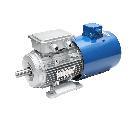
Common methods: Electromagnetic brake.
1. Structure of electromagnetic brake:
It is mainly composed of two parts: a braking electromagnet and a brake shoe brake.
The braking electromagnet consists of an iron core, an armature, and a coil. The brake shoe brake includes a brake wheel, brake shoes, and a spring. The brake wheel and motor are mounted on the same shaft.
2. Working principle: When the motor is energized, the electromagnetic brake coil is also energized, pulling the armature to overcome the spring tension, so that the brake shoe of the brake is separated from the brake wheel, and the brake motor works normally. When the switch or contactor is disconnected, the motor is de-energized, and the electromagnetic brake coil is also de-energized. Under the action of the spring tension, the armature separates from the iron core, and the brake shoe of the brake firmly grips the brake wheel, stopping the brake motor.
3. Characteristics of electromagnetic brake
Mechanical braking mainly uses electromagnetic brakes and electromagnetic clutch brakes. Both use the magnetic field generated after the electromagnet coil is energized to make the static iron core generate enough suction to pull in the armature or moving iron core to overcome the spring tension and meet the requirements of the work site. The electromagnetic brake uses the friction pads of the brake shoe to brake the brake wheel. The electromagnetic clutch uses sufficient friction between the moving friction pad and the static friction pad to immediately brake the motor after power failure.
Advantages: Electromagnetic brakes have strong braking force and are widely used in lifting equipment. Safe and reliable, it will not cause accidents due to sudden power failure.
Disadvantages: Electromagnetic brakes are large in size, the brake is severely worn, and vibration will occur during rapid braking.
Brake motor It determines the driving range, power, and speed of electric vehicles. As a power device, motor heating is a major defect, and timely maintenance and repair are required. Judging and handling motor failures is a powerful guarantee for safety.
Related News

Copyright © Taizhou Taili Explosion Proof Motor Co., Ltd. Powered by www.300.cn SEO
Friendly Link: Shenzhen Hengtuo Precision Machinery Co., Ltd.