
How many mechanical braking methods are there for brake motors?
Publish Time:
2021-12-28
Brake motor It locks the motor shaft through a mechanical device. Users often confuse the functions of brake motors, regenerative braking, and dynamic braking, leading to incorrect accessory selection.
1. Dynamic braking
Dynamic braking can be used for power failure, malfunction, or emergency stop.
Dynamic braking generally starts after the SV is disconnected or the main circuit is powered off; otherwise, the dynamic braking resistor may overheat.
2. Regenerative braking
Regenerative braking is typically used for stopping and deceleration.
(1) Regenerative braking only works when the server is functioning normally. The motor cannot brake in case of failure, emergency stop, or power failure. Dynamic braking and brake motors do not require power.
(2) Regenerative braking is automatically performed by the system, while dynamic braking and brake motors require control by an external relay.
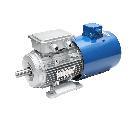
3. Brake motor
The brake motor is controlled by a mechanical device.
The brake motor generally starts after the SV is turned off; otherwise, the amplifier may overload.
Maintaining braking and the feel of braking is similar for cars and automobiles. One category includes the other. That is, brakes include holding brakes, but there may also be other braking methods, such as friction pads.
The principle depends on the specific structure. As the name suggests, the holding brake locks the motor shaft when power is off and releases it when power is on.
There are two control modes: automatic and manual. Usually, after the servo motor is enabled, the holding brake is always on, and the function of the holding brake is only to keep the motor in place when the power is off.
Brake motor pads determine the range, power, and speed of electric vehicles. As a power device, brake motor pads are consumables. After prolonged use, some problems will occur. At this time, it is necessary to conduct timely inspection and maintenance. When the brake motor pad thickness becomes thin, timely maintenance and repair are needed.
When the brake pad thickness becomes thin, the braking performance will be greatly reduced, affecting the safety of machinery and personnel. Typically, the thickness of a new brake pad is about 1.5cm. When the brake pad wear is only 0.5cm, the self-inspection frequency needs to be increased. When the brake pad wear is only 0.3cm, it must be replaced promptly; this is the limit for thin brake disc replacement.
Brake motor pads are consumables, and some problems will occur after prolonged use. At this time, timely inspection and maintenance should be carried out. The following is the general maintenance process after brake motor pad damage:
1. First, ask the user about the malfunction phenomenon and on-site situation of the damaged motor equipment, and analyze the cause of this type of malfunction based on the user's description of the malfunction.
2. Clean the machine, confirm the damaged parts, analyze the possibility of repair and restoration, find the cause of the damaged parts based on the location of the damaged parts, and avoid similar failures next time.
3. Issue a detailed inspection report and repair quotation. Party A confirms Brake motor After the quotation for the parts, proceed with the repair. After restoration, conduct a load test on the equipment, notify Party A of normal operation, and conduct transaction delivery.
Related News

Copyright © Taizhou Taili Explosion Proof Motor Co., Ltd. Powered by www.300.cn SEO
Friendly Link: Shenzhen Hengtuo Precision Machinery Co., Ltd.